Good ideas rarely die of bad luck. They die of good intentions.
Strong creative work is rarely rejected outright.
It is made smaller. Gradually, in ordinary meetings, by people who are being careful and responsible → and who are frequently, inconveniently, partly right.
Nobody decides to do it. Everybody contributes to it.
And almost no organisation measures what it costs.
This is a study of exactly how that happens, and of what works against it.
Adam Horne, Aizle · with Liza Kazyuk and Loren Cook · Cannes Lions 2026. If you read the short version, this is everything underneath it → the framework, the method behind the study, a fourth finding that did not fit the summary, the reason this works as capability rather than training, and what to actually change on Monday.
What the study found, in short
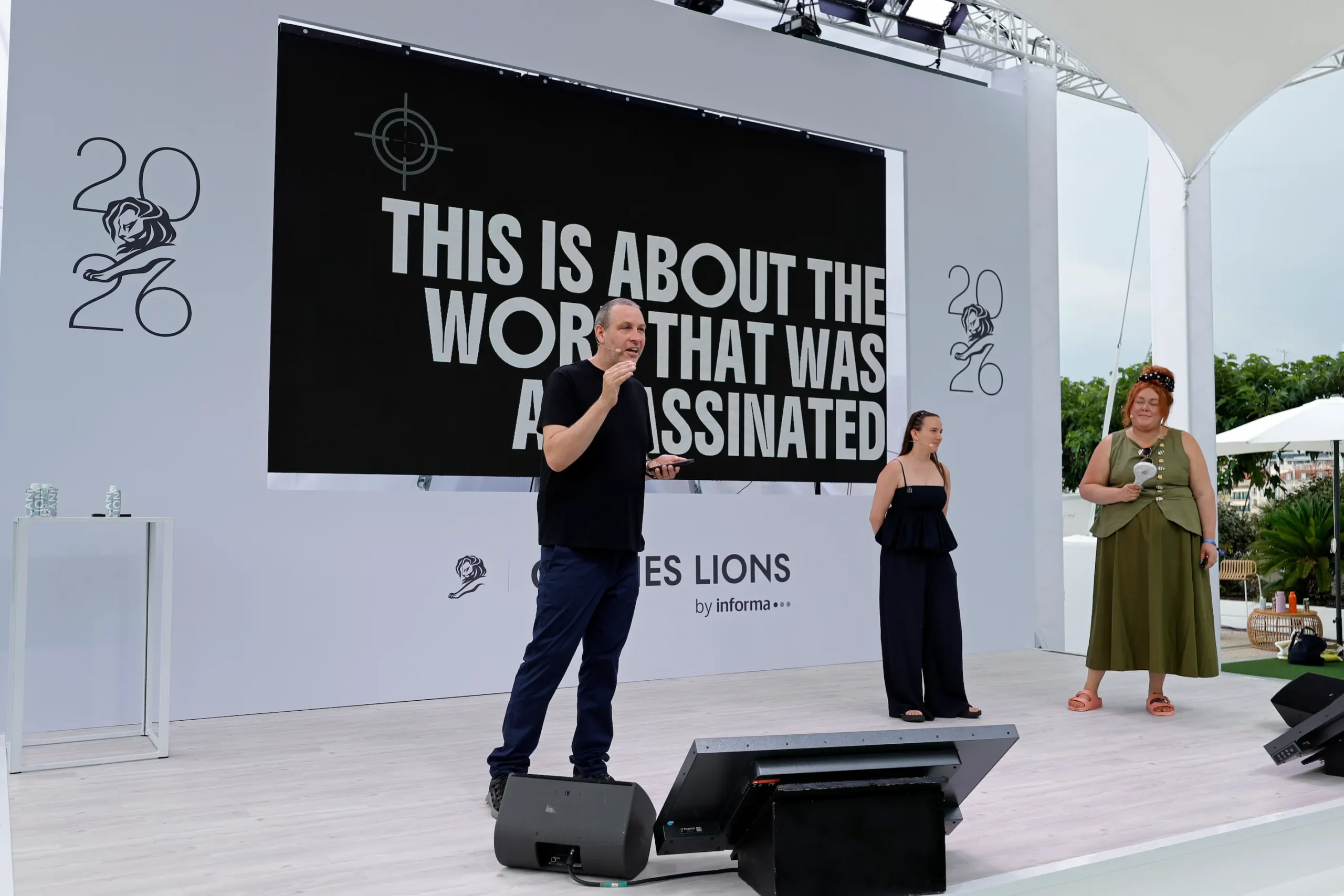
In June 2026 we ran an experiment at Cannes Lions. Across three sessions → two at the festival, one in the Learning Academy → approximately 120 senior creative and marketing professionals were asked to do something our industry rarely does in public.
We asked them to describe exactly how good creative work is weakened inside their organisations, and to write down what they say to prevent it.
They produced 37 working documents. These contained 123 responses, 97 diagnoses, and 108 preventive actions → a record of how experienced professionals actually defend ideas under real conditions.
Three findings matter for anyone who leads creative work.
1. The weakening is emotional. The defence is logical. Participants described the forces that damage their work as fear, status and self-protection. But when asked what they say in response, they reached almost entirely for evidence and rational argument. You cannot use logic to remove a feeling that logic did not create.
2. The “responsible” objections are the expensive ones. The rooms answered everyday obstacles easily. They went quiet against objections that come from genuine responsibility → the protection of budget, the demand for evidence, the memory of past failure. These are the hardest to answer, because they are partly correct.
3. Almost nobody diagnoses before responding. When facing resistance, professionals move immediately to their reply. The most effective action → identify what the other person is protecting, acknowledge the legitimate part of it, and only then reframe the decision → was understood in principle and skipped in practice, almost every time.
A note on the evidence: this is directional, not definitive. Approximately 120 people, one festival, no control group. It is also the most honest record of this problem that we know of, because it came from the people it happens to.
1. The economics → safe has become the expensive option
Cannes is a festival of survivors.
Every case study on every stage is work that succeeded → work that passed through the brief, the client, the committee, the legal review, the budget discussion, and the meeting where a senior person expressed doubt.
Almost nobody studies the rest: the braver version that existed three revisions earlier; the idea that never left the presentation; the campaign that ended in a small meeting room and was never seen again.
For creative people this has always been a private disappointment. What has changed → and what makes it a business problem rather than a professional complaint → is the economics.
When producing more of everything becomes almost free, acceptable work loses its value, because the supply of it is now unlimited.
The only work with real commercial power is work distinctive enough to be noticed, remembered and attributed to a brand.
And distinctiveness has a difficult characteristic: by definition it is unfamiliar, somewhat risky and not yet proven. The qualities that make work valuable are therefore the same qualities that careful instincts in a review meeting are designed to remove.
Consider what this means. Each time a distinctive idea is quietly made safer, the organisation is not reducing risk.
It is exchanging a visible risk that can be discussed → the brave idea might not succeed → for an invisible risk that is never discussed: the safe idea will not be noticed.
The first risk receives a meeting. The second produces a slow decline in effectiveness that nobody connects to the meeting where it was decided.
Organisations rarely calculate the cost of the safe option. That gap in the accounting is where this study begins.
2. The framework: the assassins
For the Cannes sessions we gave human form to the patterns that weaken creative work. We called them “the assassins” → characters with names, with the phrases they typically use, and with a file describing how each one operates.
The presentation is deliberately entertaining. The classification underneath it is serious.
Observe enough work being weakened and you notice the same objections arriving in the same words, in organisation after organisation, in market after market:
“I just don’t like it.” · “It’s a little risky, isn’t it?” · “Can you make it more exciting?” · “That is not who we are.” · “My teenager did not understand it.” · “Could we use AI instead?” · “Not right now.” · “We tried that before.”
These sentences are consistent enough to be catalogued.
Once a pattern has a name it can be recognised. Once it can be recognised it can be discussed. Once it can be discussed, a team has the opportunity to decide deliberately, instead of reducing the work by instinct.
Three ideas hold the framework together.
First: these people are not villains. Nobody enters a meeting intending to damage a good idea. The person who weakens the work is usually the most responsible person present → protecting the budget, the brand, the customer, the team, or their own professional position → and they sincerely believe they are helping.
This is not a polite observation. It is the analytically important point. Work is rarely damaged by bad intentions, which would be easy to confront. It is damaged by protection, which is not.
Second: there are two different motives, and they require two different responses.
Some objections come from fear → of blame, of criticism, of exposure, of conflict. The senior opinion given without reasons. The person who names a risk but never measures it. The perfectionist who protects work from judgement by never completing it. And the author of the idea, who withdraws it before anyone can reject it.
Fear is answered by reducing risk: designing the danger out of the brave option through a small test, a reversible decision, or criteria agreed in advance. You do not persuade a frightened person to be brave.
Some objections come from responsibility → and these are more difficult, because they are partly correct. The guardian of brand consistency. The manager who asks what it will cost. The researcher who requests evidence. The colleague who remembers a similar failure.
You cannot defeat someone who is already behaving well. These objections are answered by redefining what responsible means: making the cost of the safe option visible → the risk of being ignored, the drift toward the category average, the money spent on work nobody remembers → so that the safe option must also justify itself.
Third: one objection is correct. Sometimes the bravest and most generous action available is to end the wrong idea early and cleanly, so that the team’s energy moves to the idea that deserves it.
The discipline is not “never stop an idea.” It is learn which ideas to stop → and learn to distinguish honest judgement from fear, because the two can look identical.
Without this exception, the framework becomes creative people complaining about being edited. With it, it becomes a method of judgement.
Every assassin’s file includes one deliberately uncomfortable section: their fair point.
Experienced instinct is real pattern recognition. Some risks are genuine. Brand consistency has real value. Institutional memory does prevent repeated mistakes.
Acknowledging the fair point is not simply courtesy. As the evidence below shows, it is the decisive action in the entire method.
3. What we actually did
Each of the three Cannes sessions lasted 45 minutes. We introduced the assassins from the stage, performed as characters, and taught a single method.
The participants then did the work themselves: each table identified what a given assassin is really protecting, and wrote the responses that would answer it.
One rule governed those responses. Each had to be usable → a sentence a real person could say in a real meeting, respectfully, without damaging their position or the relationship.
We deliberately never provided answers.
The principle of the session → and, as it turned out, its most important design decision → was that the combined experience of the audience exceeded anything we could deliver from the stage. Our role was to provide the classification and the pressure. Theirs was to provide the knowledge.
The material. Responses were captured on paper. This decision was later supported by the data: offered both a well-designed digital submission system and a pen, participants chose paper by approximately seventeen to one.
Pages were photographed, transcribed and categorised. The final collection: 37 working documents, containing 123 responses, 97 diagnoses and 108 preventive actions, with nearly all participants consenting to publication, most of them anonymously.
The limitations, stated clearly. This is a field study, not a survey. The sample is approximately 120 self-selected professionals at a single festival, in considerable heat. Transcribing handwritten pages requires interpretation. There was no control group and no long-term follow-up.
Every figure here should be treated as directional. We would rather be accurate than impressive.
What this material offers is something surveys rarely capture: the actual sentences that experienced professionals reach for when asked a direct question → what do you say when your best work is about to be damaged?
Finding 1 → Why the logical defence keeps losing
Read the 97 diagnoses together and they are remarkably consistent about motive.
In the participants’ own words, the forces damaging their work are: status and rank. Ego. Reputation. “Fear of being blamed if it fails.” “Fear of rejection, judgement, losing, failure.” “They identify with their work.” “Afraid of disappointing anyone.”
The rooms therefore described the problem as almost entirely emotional: fear and self-protection, expressed in professional language.
Now read the 123 responses those same people wrote. The dominant strategies are rational: provide data, cite precedent, refer to the brief, present case studies, quantify the risk.
One page recommended: “Fight data with data.”
There is the mismatch, written in the participants’ own handwriting: an emotional problem, answered with a spreadsheet.
If the person weakening your idea is protecting their status, a better chart does not address what is actually driving the decision. At best it gives their concern better information to object with.
The most underdeveloped professional skill here is not argument. It is the ability to address the feeling beneath the objection: to make the brave option feel safe, to make the legitimate concern feel heard, and to make the safe option appear as what it actually is → the risky one.
The strongest responses in the collection do precisely this. And none of them contains a number.
“You do not have to like it. You are a long way from our audience. We should be concerned if you love it.”
“The people who love it will buy it. If I keep adjusting it to please everyone → more sugar, more water → nobody will like the coffee.”
These are not counter-arguments. They change what the decision is about, rather than arguing about who is correct.
Finding 2 → Where the expensive damage actually happens
Engagement across the different assassins was strikingly uneven.
The fear-based characters → the unexplained senior opinion, the vague feedback, the postponement, the unmeasured risk → produced the most pages, the most responses, and the best writing.
These are clearly familiar opponents. Against “I just don’t like it,” participants were quick, confident and often very sharp.
Against the responsibility-based characters, the rooms became quiet.
The protection of budget, the demand for evidence, and the memory of past failure produced the fewest responses in the collection, and the weakest: general appeals to risk and reward, “support it with data,” “show successful examples.”
These are adequate answers. None of them had the precision that the same participants had produced minutes earlier against easier opponents.
This is the study’s most commercially significant finding, and it is logical.
These objections are difficult precisely because their fair point is large. Money is real. Evidence matters. The previous failure genuinely happened.
Someone who is both partly correct and genuinely concerned is the most difficult person to answer in professional life. You cannot dismiss them, and arguing against them makes you appear irresponsible.
The practical implication for leaders is direct.
Your teams can already handle the obvious obstacles; experience has taught them how. Value is lost in the reasonable meetings → scoping discussions, evidence reviews, budget rounds.
That is where responses are weakest, and where teaching the reframe → what does the safe option cost? → produces the greatest return.
One line from the collection shows a participant reaching for exactly this, without being taught it:
“To get results we have never seen before, we have to try things we have never done.”
Finding 3 → The step everyone knows and everyone skips
The collection contains 123 responses but only 97 diagnoses.
The imbalance understates the pattern, because many pages moved directly to a response and left the diagnosis empty.
Under pressure, professionals reach for their reply and skip the question that makes any reply effective: what is this person actually protecting?
That omission matters more than any individual sentence.
“It is too risky” is rarely about risk; it is usually about who will be blamed. “That is not who we are” is rarely about the brand; it is usually about discomfort with the unfamiliar.
If you answer the stated objection, you miss the real one. Every skilled negotiator understands this. Almost every creative meeting forgets it.
The method demonstrated by the best entries → and the one we now teach explicitly → has three steps:
Diagnose the motive beneath the objection. Acknowledge the fair point, sincerely and early, because a person who feels understood stops defending their position. Then reframe the decision, from brave-versus-safe to the cost of brave versus the cost of being invisible.
The order is essential.
Acknowledgement before response reduces conflict. Response before acknowledgement creates it.
Finding 4 → The knowledge already exists inside the building
The most encouraging feature of the collection is what participants produced without being taught it.
Tables independently described informal alignment before a meeting → “discuss it with the sceptic before the official meeting” → which is a practice some business cultures have formalised for generations.
They described methods for protecting psychological safety, so that people stop dismissing their own ideas: “divide the session → imagination first, practicality afterwards.”
They described returning to the audience, agreeing criteria in advance → “agree what success looks like in the brief, so feedback has a target” → and the acknowledge-then-respond structure itself.
The expertise, in other words, already exists inside organisations. It is distributed, unnamed, and held privately by individuals who learned it through difficult experience.
What organisations lack is not knowledge. It is the shared language that turns one person’s hard-won sentence into a method the whole team can use.
That finding shaped everything we now believe about how this problem is solved. The solution is less like teaching and more like collecting what a team already knows and making it usable.
Why this is capability, not training
There is a reason the Cannes sessions were designed as working sessions rather than presentations.
Most training fails in a predictable pattern: an energising day, good intentions, and no lasting change. The failure is structural. The learning happened beside the work, in a room with no real consequences, so the work itself never changed.
Consulting fails in the opposite direction. The answers arrive inside a presentation, and they leave when the consultant leaves.
In both cases the organisation purchases something useful and mistakes it for a capability.
The alternative is to combine the two: real work, real pressure, and a structure that requires the team to build the capability while doing the work.
At Cannes, the stage provided the classification, the method and the time limit. The participants provided everything of value.
Nobody left with our answers. They left with their own → which are the only ones that survive the return to normal working life.
The method is simple enough to explain in one sentence and deep enough to practise for a career:
Diagnose what the person is protecting → acknowledge the fair point, out loud, first → reframe the decision, so the safe option carries its real cost.
Then respond according to motive: fear is answered by reducing risk. Responsibility is answered by redefining what responsible means.
What makes this valuable over time inside an organisation is the shared language.
Once a team can say, calmly, “that was the budget objection, and we skipped the acknowledgement” → without it becoming personal, because the pattern has a name and the name is not a colleague → the quality of creative decisions changes permanently.
The workshop lasts 45 minutes. The vocabulary is the lasting asset.
What happened at Cannes
The sessions themselves are the evidence for the method, because they were conducted using the method: in public, in 35-degree heat, with no rehearsed outcome.
One detail demonstrates this better than any measurement.
A passing visitor sat down at a table, realised she had joined a group exercise, and audibly expressed her disappointment.
Forty-five minutes later she had written one of the sharpest lines of the day. She wrote to us afterwards, without being asked:
“I sat down to auto-groan at a group exercise → and I was totally wrong. Absolutely incredible. I’ll be telling my colleagues the same.”
Her change of opinion was not a coincidence.
She was not persuaded out of her scepticism by argument. She was given a real problem, real pressure, and the discovery that she had something valuable to contribute → which is precisely the principle this study describes.
The measurable outcomes: approximately 120 senior participants across three sessions; 37 working documents; 123 responses now being published, credited or anonymous according to each contributor’s choice, as a public and growing resource which participants continue to add to.
The sessions produced unrequested enquiries within days, including requests from a major international network and a global brand to run the programme inside their own businesses.
And the participants, not the stage, produced the best material of the week → which was the claim the session was designed to test.
What leaders can change within one quarter
These findings convert directly into practice. None of the following requires budget approval. All of it requires intention.
1. Calculate the cost of the safe option, in writing. The clearest bias in the data is that the brave option must prove it is safe, while the safe option is never asked to prove it is sufficient. Make the missing question standard: every review of an ambitious recommendation includes one line describing what the safe alternative costs. You are not requiring bravery. You are completing the calculation.
2. Agree the criteria in the brief, not in the review. A large proportion of the preventive actions target the same moment: define what success looks like before the work exists, so that feedback has a target. Vague feedback cannot survive a brief that has already defined what success means. The least expensive improvement in this study is one additional field in your brief template: the quality this work must retain.
3. Separate imagination from costing. The budget conversation is not wrong; it arrives too early. When costs are examined before an idea is fully formed, the number ends the thinking before the thinking can justify the number. Separate the two stages formally: imagine fully, then cost honestly.
4. Give the patterns names → and make the fair point compulsory. “You are damaging this idea” is an accusation. “I think the budget objection has entered the room, and its fair point is real, so let us cost both options” is a diagnosis. Adopt the language, but adopt the complete method: naming the pattern without acknowledging the concern becomes blame.
5. Protect the first five minutes of an idea. The quietest loss in the collection is self-inflicted: the good idea withdrawn, apologised for, or never spoken. As one participant wrote, “the best line of the day never gets said, so the room never knows what it lost.” The solutions participants designed are procedural and almost free: time for unfinished ideas with judgement deliberately postponed; junior voices before senior ones; separating the generation of ideas from their evaluation.
6. Learn which ideas should be stopped. Review the ideas your organisation ended last quarter → not to reopen the decisions, but to sort them. Which ended because they were genuinely wrong (correct decisions, and a saving)? Which ended because someone was concerned about themselves (the expensive ones)? Most organisations cannot currently tell the difference.
About this work
Aizle is a creative consultancy with one operating principle: the work is completed, and the team becomes permanently better at producing it, within the same engagement.
It was founded by Adam Horne, who has spent twenty-three years building creative work and teaching how it is made, simultaneously, across three continents. Formerly Programme Director at Berghs School of Communication in Stockholm, and co-creator of the LIONS Creative MBA at Cannes Lions, where the three facilitators of this project first worked together.
The Kill List is this principle in its most compressed and public form: a working session in which a team names the forces that weaken its bravest work, and builds → itself → the language that protects it. It was created for Cannes Lions 2026 with Liza Kazyuk and Loren Cook, and now runs inside organisations, adapted to each company’s own situations, teams and working culture.
The material the participants built is public and still growing: 10assassins.aizle.co
If the patterns described here are recognisable in your organisation → if your teams’ output does not match their talent, and you suspect the difference is created in meetings rather than by people → the conversation usually begins with a one-day Diagnostic: your work, your meetings, and an honest assessment of which patterns operate in your organisation and what to address first.
//A 🥷
© Aizle 2026. These findings may be quoted with attribution (“Why Brave Work Dies,” Aizle, 2026). Participant contributions are published with consent, credited or anonymised according to each contributor’s choice. This is a field study: approximately 120 participants, one festival, no control group. We stated this limitation during the sessions, and we state it here.