
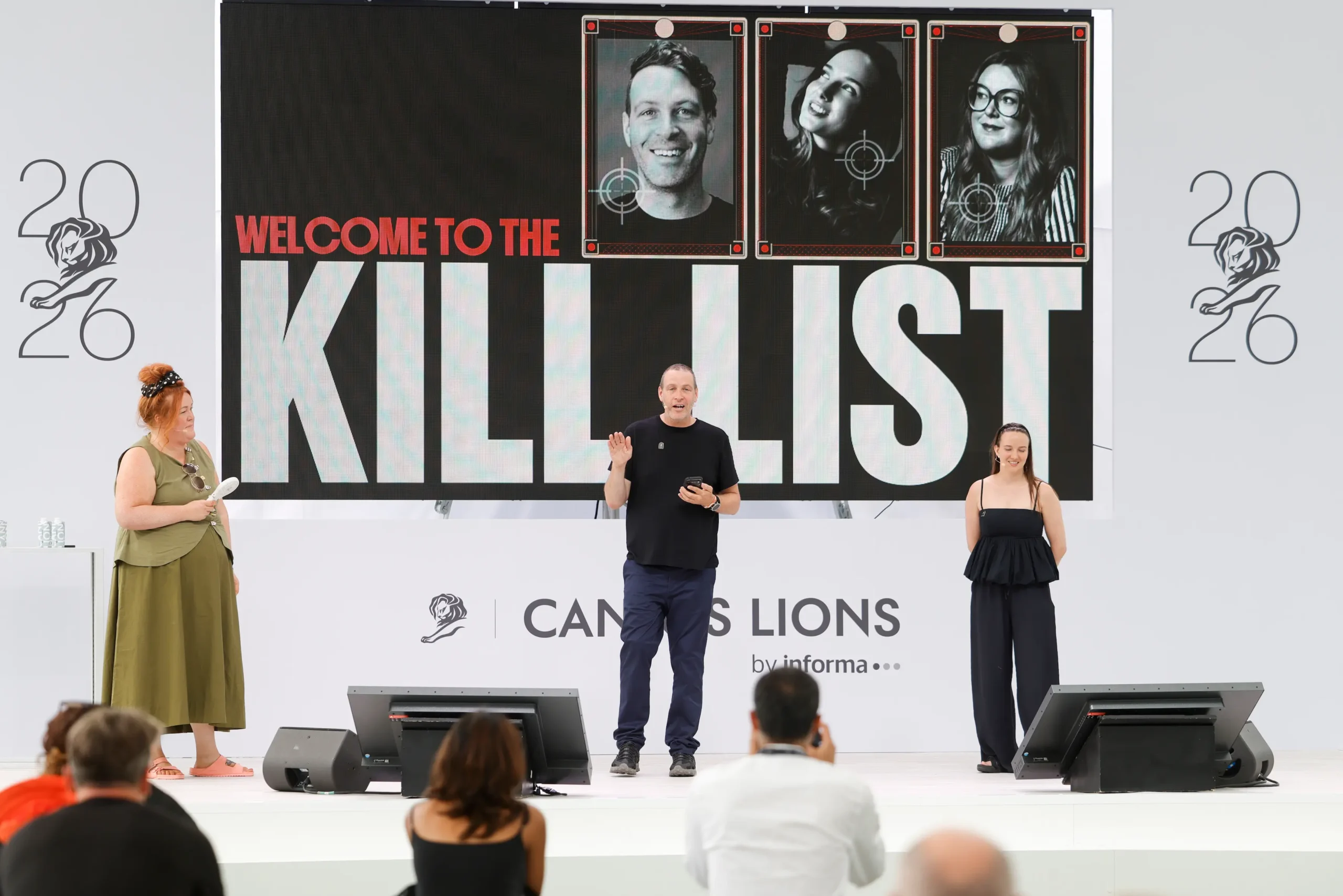
At Cannes we ran a live experiment with 120 senior creatives. Here’s what they told us about how good work really dies → and the one kind of assassin they struggled hardest to beat.
Cannes is a festival of survivors. Every stage, every case study, every film is the work that lived → the tiny fraction that made it through the brief, the client, the committee, the legal wobble and the senior person who said “hmm.”
We wanted the other 99%.
So on a terrace, in 35-degree heat, we ran a session called The Kill List. We named ten (plus) “assassins” → the everyday, reasonable reflexes that quietly make good work smaller → and asked three roomfuls of senior creatives to do two things: diagnose what each assassin is really protecting, and build the antidote, the actual line that beats it.
They produced 37 antidote pages and 123 counter-lines.
Then we read every word.
Here’s what it says.
First, the honest caveat: this isn’t a survey. It’s 120 people, one festival, one heatwave. Directional, not definitive. But it’s the most honest picture of how work dies I’ve seen, because it came from the people it happens to.
1. They diagnosed the problem as emotional → then reached for logic to fix it.
The room’s own notes said the person killing the idea is protecting their ego, their status, their fear of being blamed.
Fear, over and over.
And then, to beat that fear, they reached for a deck and a data point.
You cannot logic someone out of a feeling they didn’t logic themselves into. The biggest untapped skill in the industry isn’t a better argument. It’s a better reframe.
2. The everyday killers are easy. The “responsible” ones are brutal.
The room could beat a domineering boss with a joke → “you don’t have to like it, you’re a long way from our audience.”
But the assassins that kill from a sense of responsibility → the budget guardian, the “let’s test it first,” the “we tried that in 2019” → left them genuinely stuck.
Thin, weak, generic counters.
Those are the expensive ones, because they’re usually a bit right, and “a bit right” is much harder to argue with than “wrong.”
3. Almost nobody named what the assassin was protecting before trying to beat it.
They jumped straight to the comeback.
Which is the one move that doesn’t work.
You don’t win by being louder; you win by conceding the fair point first → out loud, early → and then reframing the choice.
The room knew this in the abstract and skipped it under pressure. Everyone does.
So what does it add up to?
The kill is emotional, the “responsible” assassins are the real frontier, and the discipline that beats them is boring and hard: diagnose the motive, concede the fair point, reframe the choice.
That last part is also, not coincidentally, how I work.
At Aizle I don’t lecture teams about this → I put them under real pressure on real work and let them build the muscle in the doing. The Kill List is that, compressed to 45 minutes.
The full field manual the room built is here: 10assassins.aizle.co.
And if your team’s good ideas keep dying somewhere between the brief and the boardroom → that’s exactly what I fix.
//A 🥷
PS)The full study → the method, all four findings, the honest caveats, and what to change by next quarter → is here: Why Brave Work Dies.