Everyone arriving at Cannes this year is carrying the same villain in their slides: AI hype. The whole industry has lined up to demand proof, kill the vanity metric, measure what matters.
The trade headline of the season writes itself → “the AI hype era is over; proof is the new flex.”
Good instinct. Also the bravery of a man kicking a corpse.
Because when the effectiveness establishment is already running the sessions → fame versus frequency, discovery versus belief, the whole orthodoxy with a marquee and a moderator → “demand proof, kill the hype” isn’t a sacred cow.
The room agreed to hate AI hype eighteen months ago. Leading there is queuing to attack a target everyone’s already finished with. It feels like courage. It’s consensus with a drumroll.
So here’s the kill nobody on the Croisette will be making. The one with heat still in it.
The industry loves to announce it finally murdered committee-safe creativity → the work built to clear the room instead of move the market, the lowest common denominator everyone could live with. We told ourselves we grew up.
We stopped chasing trophies and started chasing effectiveness, and we called that maturity.
We didn’t kill the committee. We changed its name.
Creativity-for-trophies became creativity-for-dashboards. The instinct underneath → make something safe, defensible, fireable-by-nobody → never went anywhere. It just swapped costumes.
It used to wear a tuxedo and angle for metal on a stage in the South of France. Now it wears a hoodie and angles for a green number on a slide. Same flinch. Better PR.
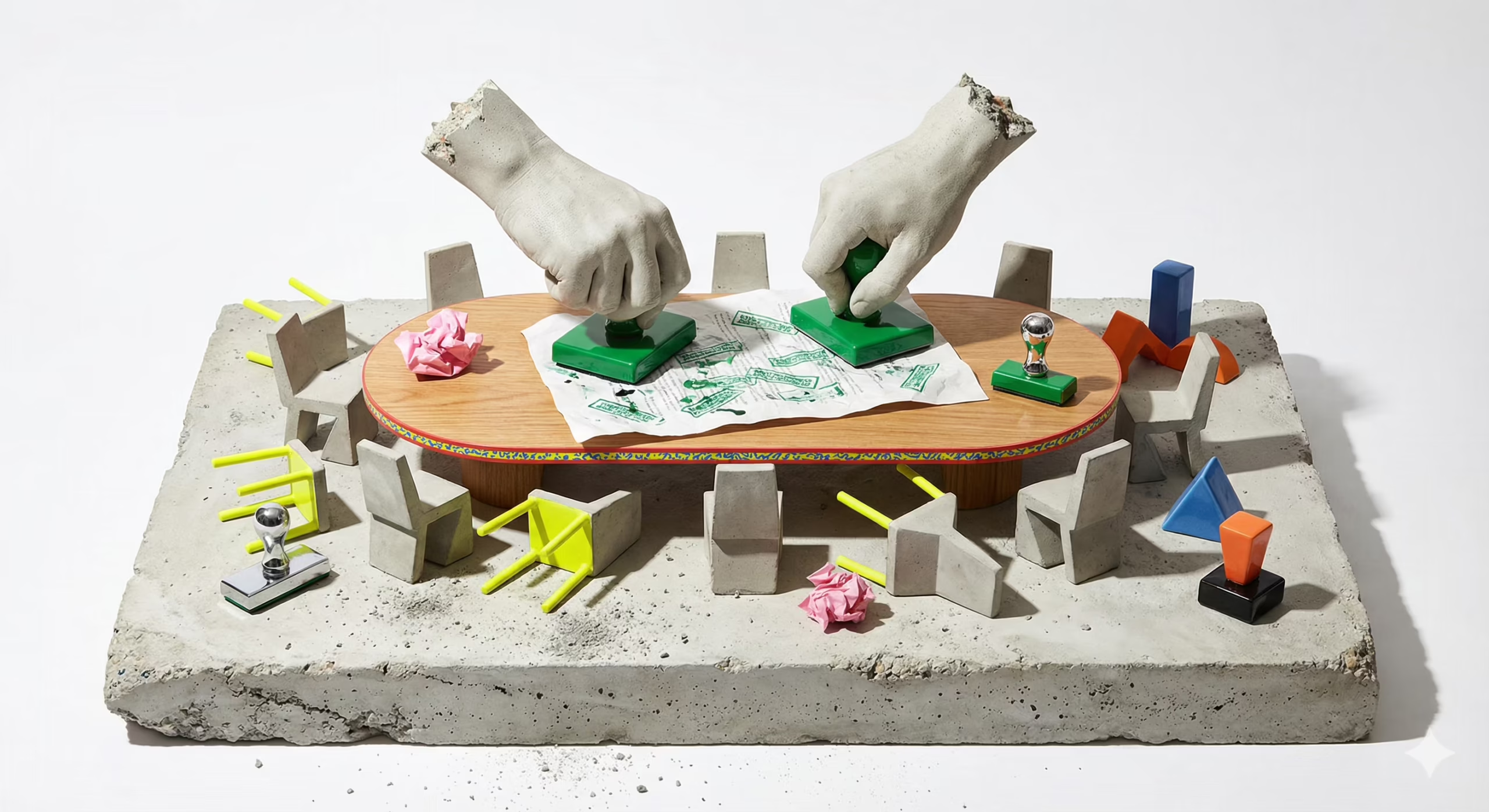
And proof, it turns out, can be every bit as committee-safe as awards ever were. Effectiveness theatre is real, and it’s everywhere: measuring what’s easy to measure because it’s easy, not because it matters.
Optimising the work for how it’ll look in the readout. Picking the idea you can prove over the idea that’s right, because “we can demonstrate impact” is a much comfier thing to tell your boss than “I believe in this.”
Watch how fast “let’s prove it works” becomes “let’s prove it in a way that’s safe to present.” Provenance becomes a permission slip. The dashboard becomes the committee → and a more powerful one than the old version, because it gets to call itself objective.
I’ll be clear, because the dumb version of this argument is anti-measurement and the dumb version is wrong. Real proof is precious. Evidence is how genuinely brave work survives a sceptical CFO → body armour, not the enemy.
Binet and Field didn’t spend two decades building the effectiveness case so we could use it as a comfort blanket.
The discipline isn’t “stop measuring.” It’s harder: telling a real, useful number from a defensive one. Knowing when the data is warning you, and when it’s just the safest-sounding way to dodge a brave call.
This is one of the assassins, by the way → it’s been on my list the whole time. The one that measures what’s easy instead of what matters. “What’s the ROI by Friday?”
It didn’t die when the industry got serious about effectiveness. It got a promotion, a dashboard, and a seat at the head of the table. Even Cannes itself has pivoted toward inputs → rewarding the systems behind the work, not just the readout → which only sharpens the question of what we’re really optimising for.
So if you want to do the genuinely brave thing at a festival about to spend a week congratulating itself on its newfound rigour: don’t kill the hype. Everyone’s doing that. Kill the cow, not the costume.
Ask, out loud, in your own reviews: is this proof real, or just the most defensible idea wearing a lab coat? Is the dashboard telling us something true, or telling us what we’d have done anyway → with better authority?
Same instinct, new judge. Name it.
That’s the workshop that we’re giving it this year’s Cannes Lions Festival of Creativity→ ten ways that assassins kill creative work, including the one now hiding behind a chart, and ten move to stop assassins before they strike near you.
The Kill List → Terrace Stage, Cannes, with Loren Cook and Liza Kazyuk. Come argue with use: Wednesday 24 June, 14:15–15:0 & Thursday 25 June, 12:00–12:45.